
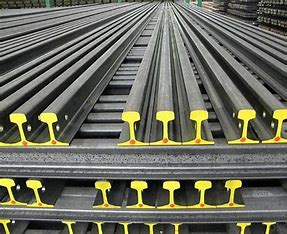
Steel Rails
Steel rails are typically constructed using high-quality steel, such as high-carbon steel or alloy steel. These grades of steel have a high strength-to-weight ratio, excellent wear resistance, and good impact strength, making them durable and reliable for long-term usage. The steel used in the construction of rails is carefully selected based on the application, taking into consideration factors such as weight, speed, and expected loads. Different grades of steel are used for distinct purposes, such as heavy-duty rails for high-speed applications or light rails for port and industrial applications.
- Technical Specification
| Standard | European standard: 39E1 (BS 80A), 45E1 (BS 90A), 45E3 (RN 45) ,46E2 (U33) , MAV48, 49E1 (S49), 49E5, 50E2, 50E3, 50E6 (U50), 54E1 (UIC54), 54E2 (UIC54E), 54E3 (S54), 54E4, 54E5, 56E1, 60E1 (UIC60), 60E2. Australian standard: AS60 and AS68. Russian standard: R50 (P50) and R65 (P65). |
| Grade | European standard R260/R350HT, China Standard: GB2585-2007 |
| Size | 12 to 25 mtr |
| Certification | ROHS, ISO, IBR, BV, SGS |
Pablo Villalpando –
Good product. I really like it so much.